
Understanding EV Charger Load Balancing and Why It Matters
Introduction
As more households switch to electric vehicles, installing a home charger has become an essential part of daily life. However, charging an EV places additional demand on your property’s electrical system. This is where EV load balancing becomes an important feature.
Modern EV charging technology is designed to do more than simply recharge your vehicle. It can intelligently monitor your home’s electricity usage and automatically adjust charging power to prevent your electrical supply from becoming overloaded. This improves home EV charger safety, protects your property’s electrical infrastructure, and allows you to charge with confidence.
At McNally EV, we install smart charging systems that incorporate advanced electrical load management, ensuring every installation is safe, reliable, and future-ready.
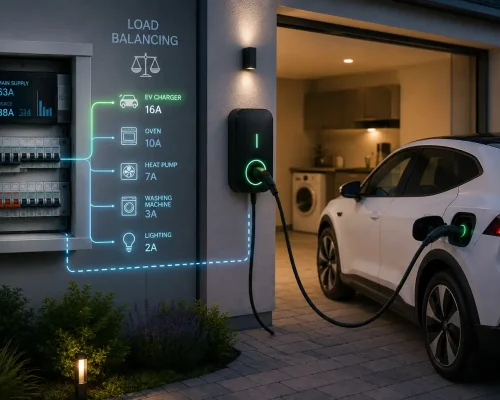
What Is EV Load Balancing?
EV load balancing is a smart technology that monitors the total amount of electricity your property is using at any given moment.
Every home has a maximum electrical capacity. Appliances such as ovens, electric showers, heat pumps, washing machines, and EV chargers all consume electricity simultaneously. Without proper management, running several high-powered appliances together could exceed your home’s available supply.
Load balancing continuously measures this demand and automatically adjusts your EV charger’s power output to stay within safe operating limits.
Instead of switching the charger off, the system simply reduces charging speed temporarily until more electrical capacity becomes available.
This intelligent process happens automatically without requiring any input from the homeowner.
Why Load Balancing Matters
Adding an EV charger increases the electrical demand on your property.
Without electrical load management, excessive demand could potentially:
- Trip your main fuse
- Cause nuisance power interruptions
- Place unnecessary stress on your electrical installation
- Require costly electrical upgrades in some properties
A smart charger installation fitted with load balancing technology helps avoid these issues by ensuring your home never draws more electricity than it safely can.
The result is safer, more efficient charging without compromising the performance of other household appliances.
How Smart Charger Installation Works
During a professional installation, an energy monitoring device is fitted alongside your consumer unit.
This device constantly measures your home’s electricity consumption.
If your household demand suddenly increases, for example, someone switches on the electric shower while the oven and washing machine are running, the charger automatically reduces its charging output.
Once household demand decreases, the charger returns to its normal charging speed.
This dynamic adjustment happens in real time and is one of the key advantages of modern EV charging technology.
Protecting Your Home's Electrical System
One of the biggest benefits of home EV charger safety is preventing electrical overload.
Many UK homes have electrical supplies that were never designed to accommodate high-powered EV charging alongside everyday household usage.
Load balancing protects your installation by:
- Preventing overloads
- Reducing the likelihood of tripped breakers
- Helping maintain stable electrical performance
- Extending the lifespan of your electrical equipment
- Supporting safe operation during peak electricity usage
For many homeowners, this means avoiding expensive supply upgrades while still enjoying convenient home charging.
Ideal for Modern Family Homes
Today’s homes often contain multiple high-powered electrical devices operating throughout the day.
These may include:
- Electric vehicles
- Heat pumps
- Electric showers
- Induction hobs
- Tumble dryers
- Battery storage systems
- Solar PV systems
As homes become increasingly electrified, electrical load management becomes even more important.
Smart charging ensures every appliance works together efficiently without exceeding your property’s available electrical capacity.
Supporting Solar and Battery Storage Systems
Load balancing also works exceptionally well alongside renewable energy technologies.
If your property has solar panels or battery storage, many smart charging systems can prioritise available renewable electricity before importing power from the grid.
This allows homeowners to:
- Increase solar self-consumption
- Lower electricity bills
- Reduce reliance on grid electricity
- Charge vehicles more sustainably
McNally EV can advise on integrated solutions that combine EV charging with solar and battery storage for maximum energy efficiency.
Saving Money Through Smarter Charging
Although load balancing is primarily a safety feature, it can also help reduce charging costs.
Many smart chargers allow homeowners to schedule charging during off-peak electricity tariffs while continuing to monitor household demand.
Combined with dynamic load balancing, this creates an efficient charging solution that:
- Uses electricity more intelligently
- Supports lower energy bills
- Maximises available electrical capacity
- Delivers reliable overnight charging
Smart charging is becoming one of the most valuable investments for EV owners.
Is Load Balancing Required?
Not every property requires load balancing, but many installations benefit from it.
During your survey, qualified installers assess:
- Existing electrical supply
- Main fuse rating
- Consumer unit capacity
- Household electricity demand
- Future electrical requirements
If necessary, load balancing can eliminate the need for expensive supply upgrades while maintaining full compliance with UK electrical regulations.
Professional assessment ensures your charger is correctly specified for your property.
Why Choose McNally EV?
With over 20,000 successful installations across the UK, McNally EV provides expert advice and professional installation tailored to every property.
Our experienced engineers assess your home’s electrical system before recommending the most suitable charging solution, including advanced EV load balancing where appropriate.
We supply and install smart chargers that prioritise safety, efficiency, and long-term reliability, helping homeowners prepare for the future of electric vehicle ownership.
Whether you’re installing your first charger or upgrading an existing system, our team ensures every installation meets the highest industry standards.
Explore our Home EV Charger Installation, Battery Storage Solutions, Solar Panel Installation, and Commercial EV Charging Solutions pages to learn more about creating a smarter, more energy-efficient property.
Conclusing
As electric vehicles become increasingly common, protecting your home’s electrical system has never been more important.
EV load balancing allows your charger to intelligently adapt to your household’s electricity usage, delivering safe, efficient charging without overloading your electrical supply.
Combined with professional smart charger installation, advanced electrical load management, and the latest EV charging technology, it provides homeowners with complete peace of mind while preparing their homes for the future.
Contact McNally EV today to arrange a professional home EV charger survey and discover how smart load balancing can make your charging safer, smarter, and more efficient.
Frequently Asked Questions
EV load balancing monitors your home’s electricity usage and automatically adjusts your charger’s output when demand increases. This protects your electrical system, prevents overloads, and ensures safe, efficient charging without interrupting other household appliances.
Many properties benefit from load balancing, especially homes with limited electrical capacity or multiple high-powered appliances. A professional installation survey determines whether electrical load management is recommended for your specific property and energy usage.
Load balancing only temporarily reduces charging speed when your home is using significant electricity elsewhere. Once demand falls, your charger automatically returns to full power, ensuring safe charging without affecting overall convenience.
Yes. Many smart EV chargers integrate with solar panel systems and battery storage. They can prioritise renewable electricity when available, helping reduce grid consumption, lower energy costs, and maximise your home’s sustainable energy generation.
Many modern smart chargers support load balancing, although additional monitoring equipment may be required. A qualified installer like McNally EV will recommend the most suitable solution based on your property’s electrical capacity and charging needs.