
How Battery Storage Can Improve EV Charging Efficiency
Introduction
Electric vehicles are already helping UK households reduce their reliance on petrol and diesel, but combining an EV charger with a home battery system can take energy efficiency a step further.
With battery storage EV charging, homeowners can store electricity when it is generated or available at a lower cost and use it later to help charge their vehicle. When combined with solar panels, battery storage can also increase the amount of renewable electricity used at home rather than drawing power from the grid.
For households looking to make EV ownership more cost-effective and sustainable, integrating an EV charger, solar panels and battery storage can provide a practical whole-home energy solution.
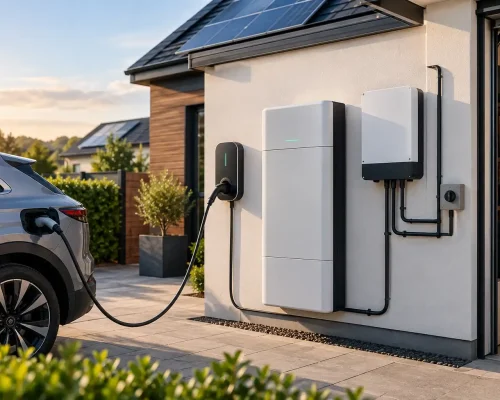
What Is Battery Storage EV Charging?
A home battery stores electricity so it can be used at another time. Depending on the system and energy setup, the battery may be charged using electricity generated by solar panels or power imported from the grid during lower-cost periods.
That stored energy can then help supply household appliances and, where the system is designed appropriately, contribute towards charging an electric vehicle.
Rather than thinking of an EV charger as an isolated piece of equipment, homeowners can consider how their charger works alongside solar generation, battery storage and their electricity tariff.
McNally EV provides battery storage solutions designed to help households make better use of the electricity available to them.
How Can Home Battery Systems Reduce EV Charging Costs?
One of the biggest attractions of home battery systems is the ability to shift when electricity is purchased and used.
Some electricity tariffs offer cheaper rates during specific off-peak periods. A compatible battery system may be able to charge during these periods, storing lower-cost electricity for use later.
For EV owners, this creates more flexibility. Instead of relying entirely on electricity imported from the grid at the time the vehicle is plugged in, a suitable energy management system can coordinate energy stored in the battery, solar generation and grid electricity.
Actual savings will depend on factors including:
- Your electricity tariff and unit rates
- Battery capacity and usable storage
- Your household electricity consumption
- EV mileage and charging requirements
- Solar generation, if solar panels are installed
- How the battery, charger and energy management system are configured
The right setup therefore depends on the individual property rather than a one-size-fits-all approach.
Maximise Solar Energy for EV Charging
Combining solar battery storage in the UK with an EV charger can be particularly useful for homeowners who want to make greater use of their own renewable electricity.
Solar panels typically generate electricity during daylight hours. However, many EV owners are away from home during part of the day and plug their cars in during the evening.
Without battery storage, surplus solar electricity that cannot be used immediately may be exported to the grid. A home battery can instead store some of that excess generation, subject to system capacity and settings.
When the EV returns home, that stored renewable energy can potentially contribute towards charging the vehicle.
For homeowners considering a complete renewable energy setup, McNally EV also offers professional solar panel installation alongside battery storage and EV charging solutions.
Improve Whole-Home Energy Efficiency
Battery storage isn’t only about EV charging. A well-designed system can help improve energy efficiency throughout the property.
Stored electricity can be used when household demand increases, reducing the amount of electricity that needs to be imported from the grid at that moment. When paired with solar panels, battery storage can also increase the proportion of self-generated renewable electricity consumed within the home.
A connected setup may include:
Solar panels → Home battery → Household electricity and EV charger → Grid when required
The exact energy flow will vary according to the equipment installed, battery state of charge, solar production, household demand and system configuration.
This integrated approach gives homeowners greater control over when and how they use electricity.
Battery Storage and Smart EV Charging
Smart charging technology adds another layer of control.
A smart EV charger can schedule charging around factors such as electricity tariffs and charging requirements. Depending on the equipment and integrations available, it may also work as part of a wider home energy management setup incorporating solar generation and battery storage.
For example, instead of immediately charging an EV at full power as soon as it is plugged in, smart charging can help schedule charging for suitable periods while ensuring the vehicle has the required charge when it is needed.
If you’re considering an electric vehicle, McNally EV’s home EV charger installation service can help you choose an appropriate charging solution for your property and driving requirements.
Is Battery Storage Worth Considering for EV Owners?
Battery storage may be particularly attractive if you already have solar panels, are planning a solar installation or have access to electricity tariffs with different rates throughout the day.
Before choosing a system, consider your household’s typical electricity consumption, the size of your solar array, your EV’s charging needs and when electricity is normally used.
Battery capacity also matters. A home battery does not necessarily need to provide all the electricity required for an EV charge to be useful. It can form one part of a wider energy strategy alongside solar generation, smart charging and carefully timed grid imports.
Professional system design is important to ensure the components work together effectively and are suitable for the property’s electrical installation.
Create a Smarter Home Energy System with McNally EV
Combining battery storage EV charging, solar panels and smart charging technology can give homeowners greater control over their energy use. It can help make better use of renewable electricity, provide opportunities to shift consumption to lower-cost periods and reduce unnecessary reliance on grid electricity at peak times.
The best solution depends on your property, driving habits and existing energy setup.
McNally EV is a family-owned Yorkshire business providing EV charging and renewable energy solutions across the UK. With more than 20,000 installations completed, our experienced team can help you explore EV chargers, solar panels and battery storage as part of an integrated home energy system.
Ready to make your home and EV charging setup more energy efficient? Contact McNally EV on 01535 444 101 or email info@mcnallyelectrical.co.uk to discuss your battery storage and EV charging requirements.
Frequently Asked Questions
Can I charge my electric car from a home battery?
Yes, depending on the design and compatibility of your home energy system, stored electricity can contribute towards charging an electric vehicle. The amount available will depend on factors such as battery capacity, household energy demand and the EV’s charging requirements.
Can I use solar battery storage to charge my EV?
Yes. Solar panels can generate electricity during daylight hours, while a solar battery storage system can store surplus generation for later use. This can make it possible to use more of your own renewable electricity when charging your EV, including at times when your solar panels are producing little or no power.
Does battery storage make EV charging cheaper?
Battery storage can help reduce charging costs in some households. For example, a battery may be charged using surplus solar electricity or during lower-cost tariff periods, with that stored electricity used later. Actual savings depend on your electricity tariff, battery system, energy consumption and charging habits.
What size home battery do I need for EV charging?
There is no single battery size that’s right for every EV owner. The appropriate capacity depends on your vehicle usage, daily mileage, household electricity consumption, solar generation and how you intend to use the battery. A professional assessment can help determine the most suitable home battery system for your property.
Do I need solar panels to install a home battery?
Not necessarily. A home battery can be installed without solar panels and may be used to store electricity imported from the grid, subject to the system configuration and electricity tariff. However, combining battery storage with solar panels can allow homeowners to store and use more of the renewable electricity generated at their property.
Can a home battery and EV charger work together?
It depends on your circumstances. Solar battery storage in the UK may be particularly useful for EV owners who generate surplus solar electricity, charge regularly at home or want greater control over when they use grid electricity. Installation costs, electricity tariffs, solar generation and household consumption should all be considered when assessing the potential benefits.
Is solar battery storage worth it for UK EV owners?
Compatible batteries, smart EV chargers and energy management technology can form part of an integrated home energy system. The precise functionality depends on the products installed and how the system is configured, so compatibility should be considered when choosing your EV charging solutions.
How can McNally EV help with battery storage and EV charging?
McNally EV provides EV charger, solar panel and battery storage installations, helping homeowners create an integrated energy setup suited to their property and energy requirements. Our team can assess your existing electrical system and discuss suitable options for improving energy efficiency and making better use of renewable electricity.